
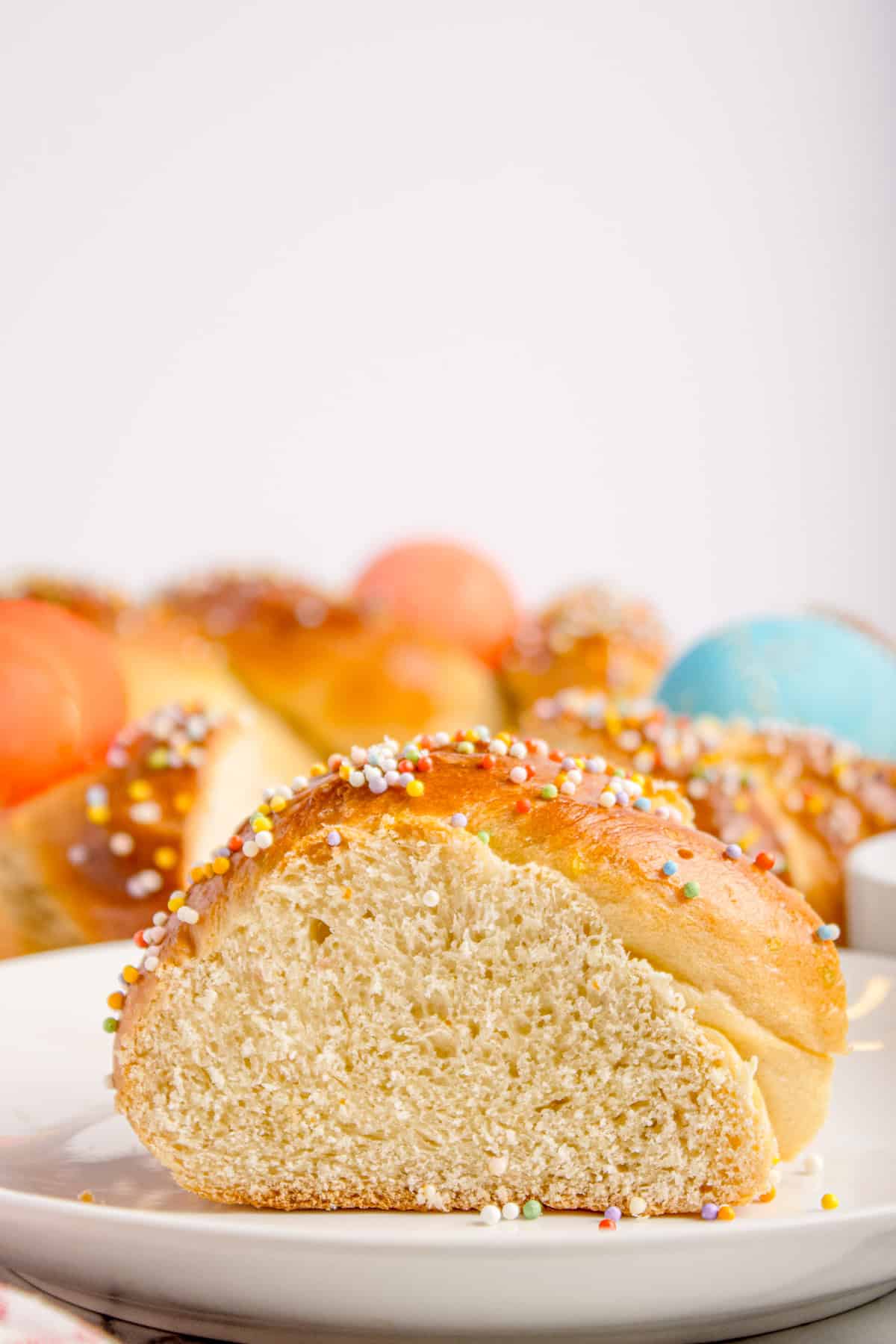
Get ready to wow your guests with this gorgeous Easter bread wreath. It’s the kind of centerpiece that will make everyone pause before devouring it. And don’t let how it looks fool you. This recipe is way easier to make than it seems!
Feel free to add painted eggs and sprinkles for a festive touch, or just keep it simple and let the bread shine on its own. Either way, it’s going to be delicious. Let’s get started!
Looking for more easy bread recipes? Try White bread with poolish, Sourdough Artisan Bread or homemade sandwich bread.

Jump To Recipe
Why You'll Love This Recipe
Show-stopping but simple: It looks impressive on the table, yet the dough is easy to make.
Family-friendly and festive: Your kids will love the sprinkles and the look of the eggs, and the adults appreciate the significance of the bread as well as its flavor.
Recipe Ingredients
You’ll need the following ingredients to make this Easter Bread recipe.
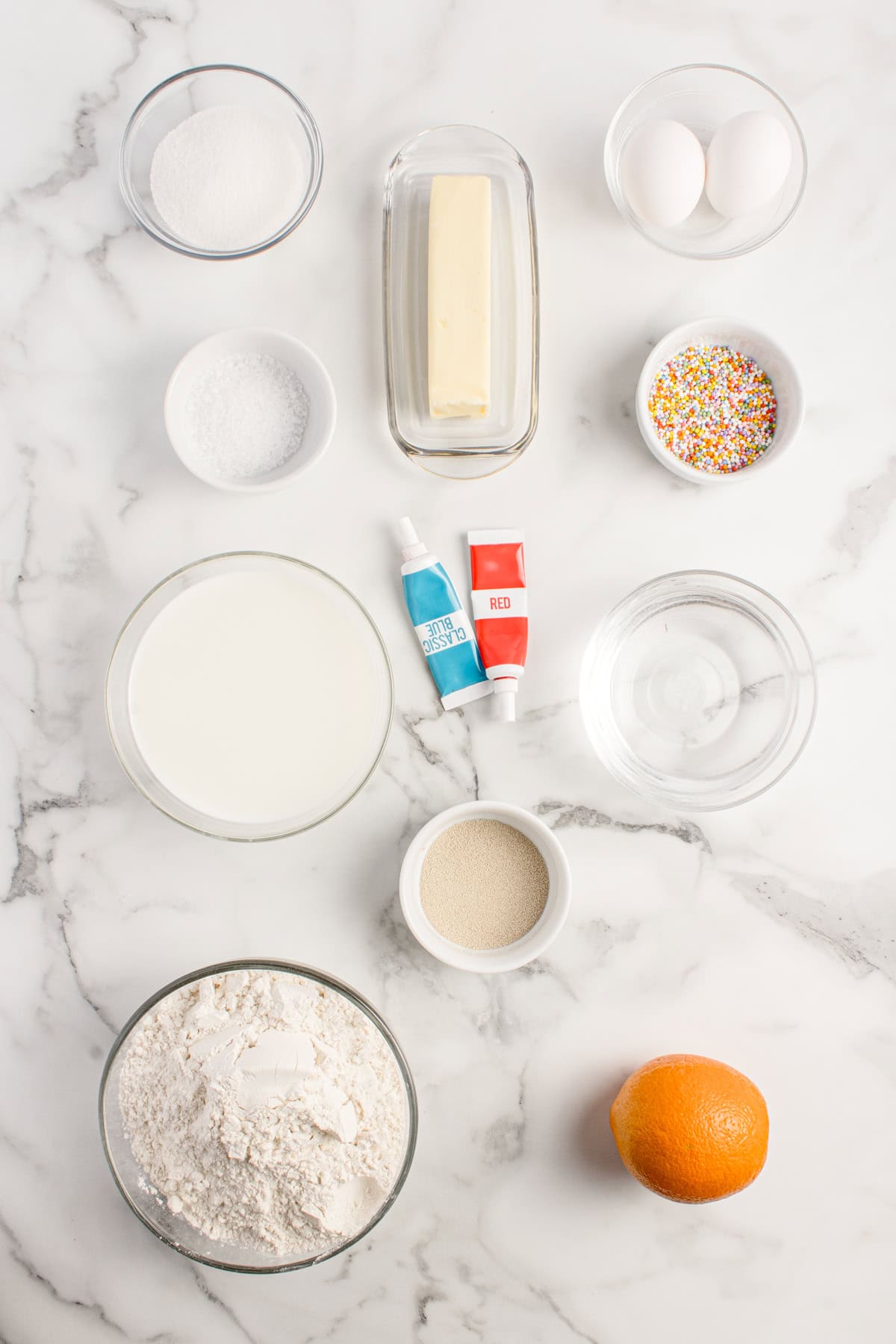
Ingredient Notes
Instant Yeast: I like using instant yeast because it always gives me a reliable, consistent rise without proofing. Substitute: Active dry yeast but be sure to dissolve it in the warm milk first.
Milk: Milk adds moisture, richness, and a softer crumb to the dough. I have found that warm milk that's 100-110°F usually helps activate the yeast quickly. Substitute: Plant-based milk (unsweetened almond, pea, soy, or oat).
Orange Zest: The zest adds an aromatic citrus flavor that elevates the bread without making it "orange-flavored." Substitute: Lemon zest, or don't use zest at all.
Eggs (in the dough): Eggs enrich the dough, improve structure, and create a soft, golden crumb.
Hard-Boiled Dyed Eggs: They are decorative and traditional. They are not safe to eat after baking and should be discarded. Substitute: Skip the eggs entirely if boiled eggs are not your thing.
Egg Wash: Creates shine and helps sprinkles stick to the surface of the bread. Substitute: Milk or cream alone for lighter browning. Sprinkles: They are optional and purely decorative and festive.
Easter Bread Wreath Recipe Step-By-Step
Check out these step-by-step instructions with images. Just so you know, you'll find all the details and exact ingredients of this recipe on the printable recipe card below!
Step 1: Dye the Eggs
Dye the hard-boiled eggs according to the package instructions. Let them dry completely, for at least 2 hours or overnight.
Note: These eggs are decorative and should not be eaten after baking.
Step 2: Make the Dough
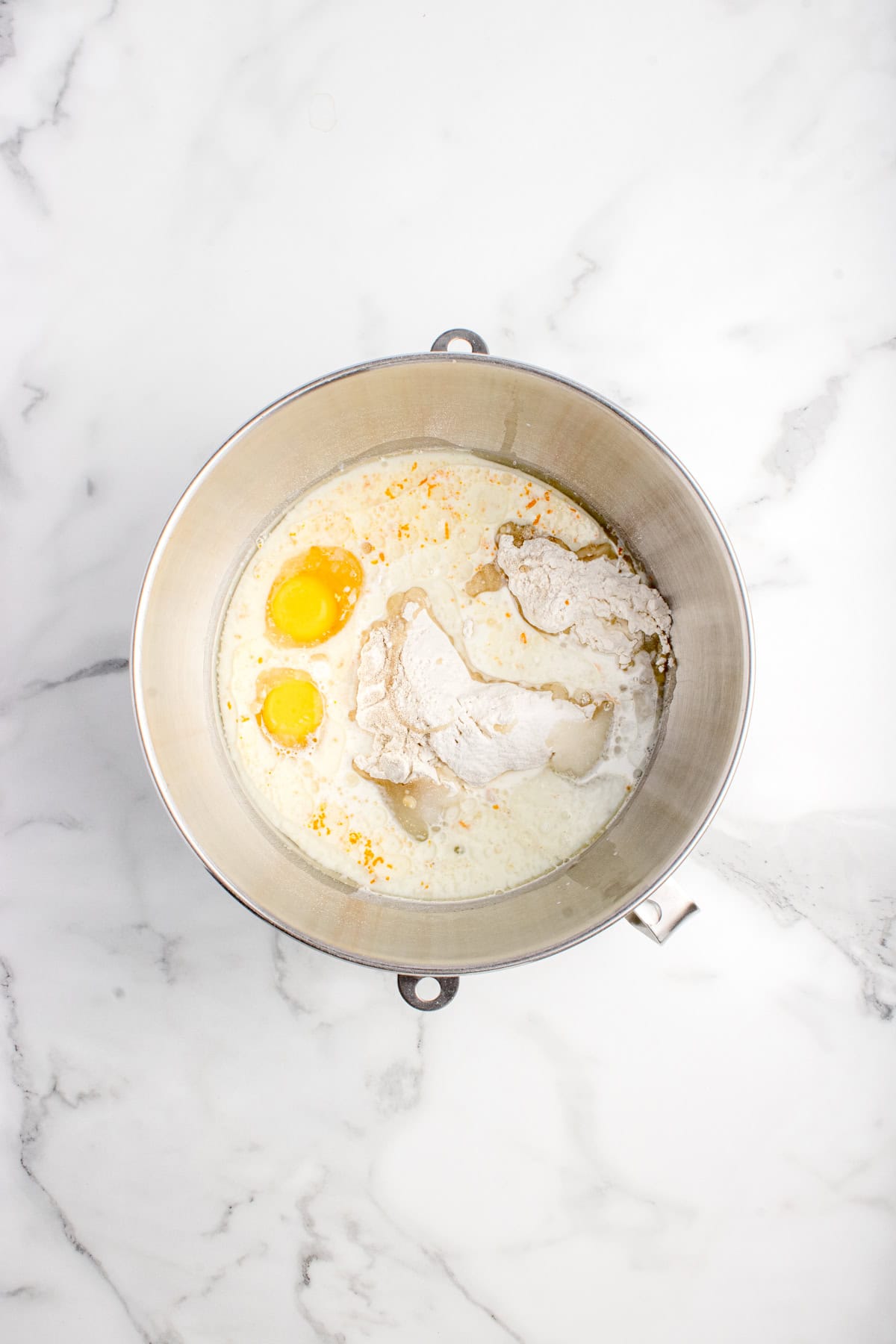
In a large bowl, whisk together the warm milk, melted butter, yeast, salt, flour, sugar, orange zest, and eggs until they are all combined.
Stand mixer: Mix them all with the dough hook on low speed for 2-3 minutes, then increase the speed to medium and mix for 5-7 minutes until a smooth, soft dough forms.
By hand: Mix them all until they are combined, then knead the dough on a lightly floured surface for 8-10 minutes until it becomes smooth. The dough should be soft and slightly tacky to the touch but should not stick to your hands. If it sticks, add flour 1 tablespoon at a time.
Step 3: First Rise
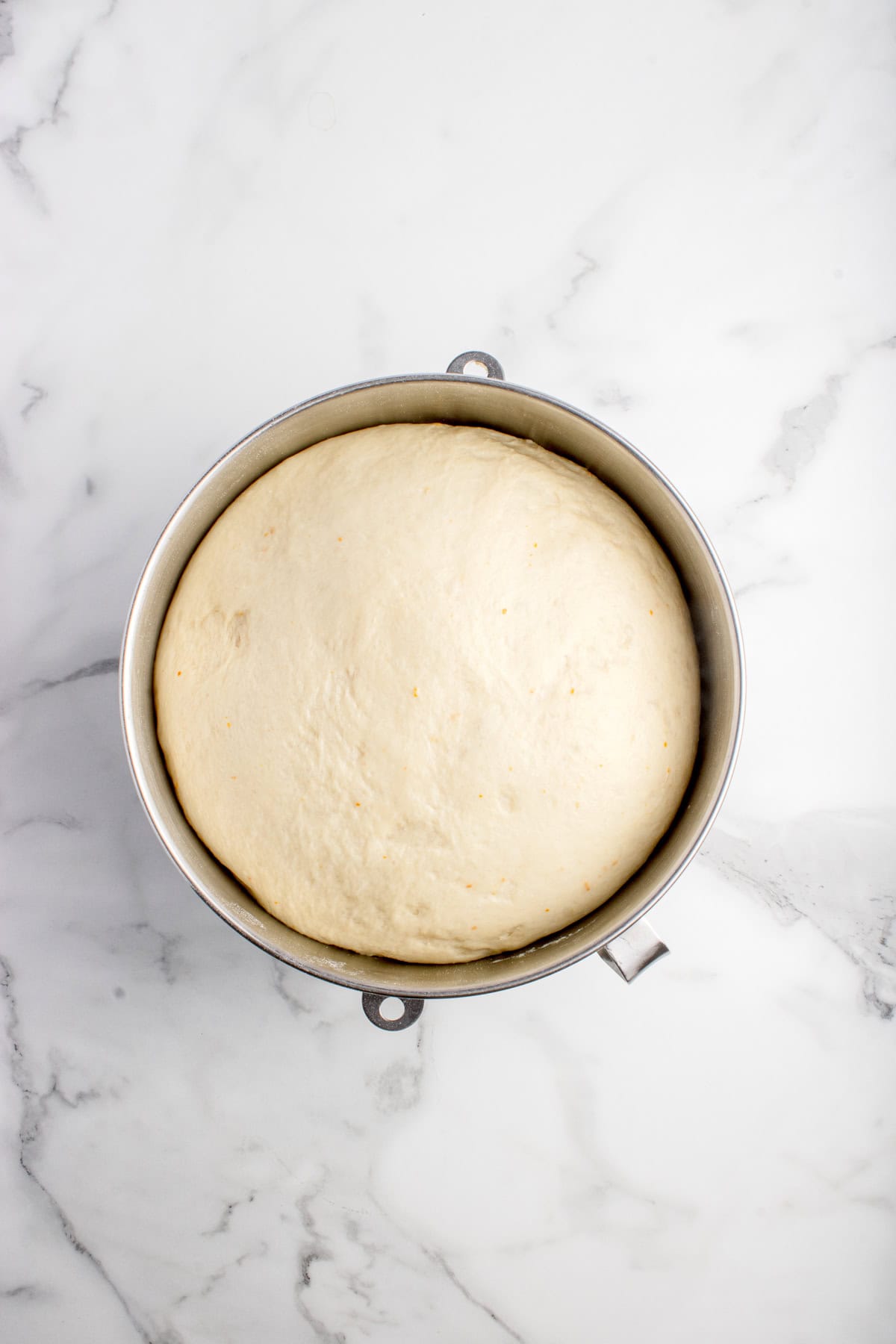
Cover the bowl and let the dough rise until it doubles in size, about 1 to 1½ hours.
Step 4: Shape
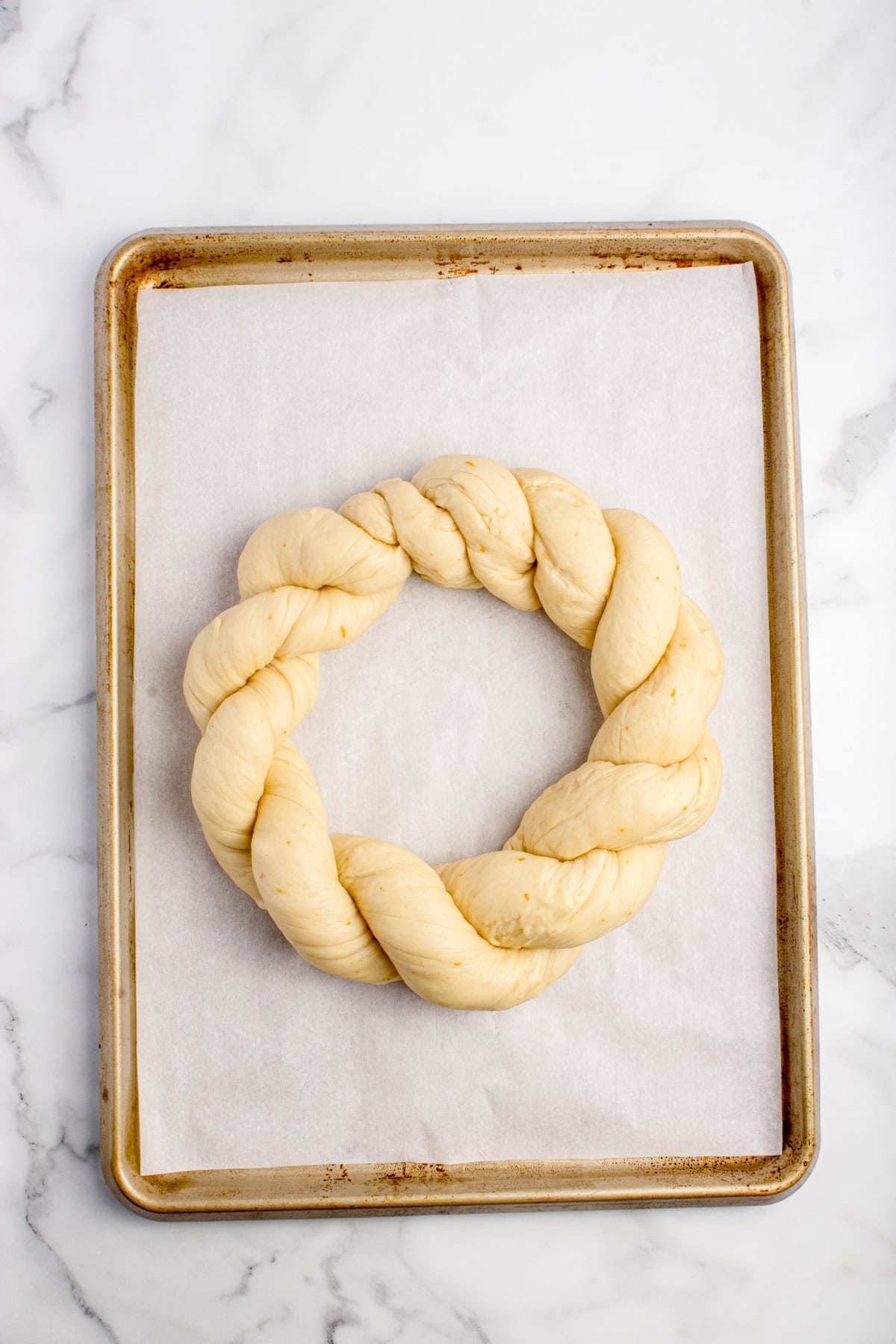
Gently deflate the dough and place it on a lightly floured surface. Divide it in half. Roll each half into a 28-inch log. Twist the two logs together and form them into a circle. Pinch the ends to seal.
Step 5: Add the Eggs
Place the wreath on a parchment-lined baking sheet. Nestle the dyed eggs into the twisted sections of the wreath, pressing them gently so that they sit securely slightly toward the inside of the circle so they stay in place as the dough rises and bakes.

Step 6: Second Rise
Cover the bread loosely and let it rise until it becomes puffy for about 30-45 minutes.
Step 7: Egg Wash & Sprinkles
Preheat the oven to 350°F (175°C). Brush the dough with the egg wash, carefully avoiding the decorative eggs. Immediately sprinkle the sprinkles over the dough.
Step 6: Bake
Bake the wreath for 30–35 minutes, until it turns golden brown and is baked through. The bread should register 190°F on an instant-read thermometer inserted into the thickest part of the dough. Let the bread cool slightly before serving.

Recipe Tips and Tricks
Use a scale if possible for accuracy and consistency.
Place the eggs securely in the twists to prevent them from popping out.
Check the bread at the 25 minute mark and tent it with foil if it looks like it's browning too fast.
Bake it on the middle rack for even heat circulation.
Storage and Reheating
Room Temperature: Store it tightly wrapped at room temperature for up to 2 days. Refrigerator: I don't recommend doing this. Refrigeration tends to dry out enriched breads.
Freezer: Freeze the baked bread (after removing the decorative eggs) for up to 2 months.
Reheating:
Whole loaf: Warm it at 300°F for 10–15 minutes, wrapped in foil.
Slices: Toast them lightly or warm them at 300°F till they are warmed through.
Your Questions Answered
Absolutely!
It should be golden brown and have an internal temperature 190°F. You can use an instant-read thermometer to check the temperature.
No, it's lightly sweet and balanced.
Absolutely! Be sure to include reheating instructions when you do.
In a Dinner Rut?
Sign up for our newsletter!
Please Rate this Recipe!
We hope you love this Easter Wreath Bread recipe! If you make it, be sure to leave a rating so we know how you liked it!
More Recipes You'll Love
Looking for other easy and delicious recipes? Try these:




Recipe

Easter Bread Wreath
Ingredients
Method
- Dye the hard-boiled eggs according to the package instructions. Let them dry completely, for at least 2 hours or overnight.Note: These eggs are decorative and should not be eaten after baking.
- In a large bowl, whisk together the warm milk, melted butter, yeast, salt, flour, sugar, orange zest, and eggs until they are all combined. Stand mixer: Mix them all with the dough hook on low speed for 2-3 minutes, then increase the speed to medium and mix for 5-7 minutes until a smooth, soft dough forms. By hand: Mix them all until they are combined, then knead the dough on a lightly floured surface for 8-10 minutes until it becomes smooth. The dough should be soft and slightly tacky to the touch but should not stick to your hands. If it sticks, add flour 1 tablespoon at a time.
- Cover the bowl and let the dough rise until it doubles in size, about 1 to 1½ hours.
- Gently deflate the dough and place it on a lightly floured surface. Divide it in half. Roll each half into a 28-inch log. Twist the two logs together and form them into a circle. Pinch the ends to seal.
- Place the wreath on a parchment-lined baking sheet. Nestle the dyed eggs into the twisted sections of the wreath, pressing them gently so that they sit securely slightly toward the inside of the circle so they stay in place as the dough rises and bakes.
- Cover the bread loosely and let it rise until it becomes puffy for about 30-45 minutes.
- Preheat the oven to 350°F (175°C). Brush the dough with the egg wash, carefully avoiding the decorative eggs. Immediately sprinkle the sprinkles over the dough.
- Bake the wreath for 30–35 minutes, until it turns golden brown and is baked through. The bread should register 190°F on an instant-read thermometer inserted into the thickest part of the dough. Let the bread cool slightly before serving.
We'd Love to Hear From You