Ingredients
Method
- Pour the entire 750 ml bottle of Laphroaig Scotch into a clean 1-liter glass pitcher or mixing jar. Save the bottle. Add 20 dashes of Peychaud’s bitters.
- Add 1.5 fl oz of maple syrup and 2 fl oz of cold water.
- Stir well with a long spoon until the syrup is completely dissolved.
- Using a small funnel, pour the mixture back into the original Laphroaig bottle or a clean 1-liter glass swing-top bottle (it will hold the whole batch). Pour any extra into a glass and enjoy it right away.
- Seal tightly and lay or stand the bottle in your freezer door for at least 4 hours (ideally overnight).
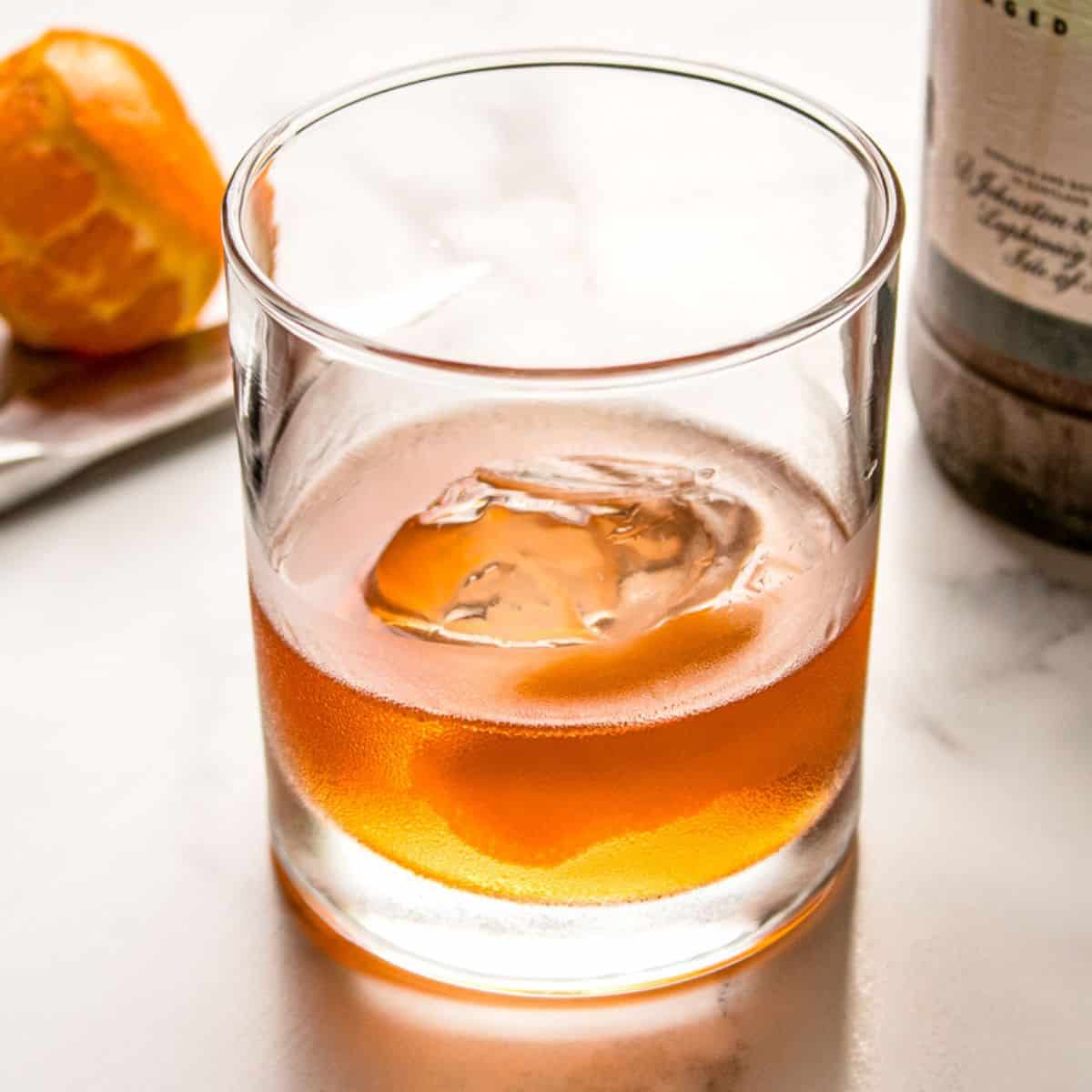
- Pour 2.5 to 3 fl oz directly into a chilled rocks glass, with or without a single large clear ice cube. Express a fresh strip of mandarin peel over the glass, wipe the rim, drop it in, and serve.
Taste to check the balance:Lacking spice depth? Add 2 to 3 additional dashes of bitters.Too hot or punchy? Add an extra 0.5 fl oz of cold water.Too sweet? Add a splash of straight Scotch.
Notes
Laphroaig Select Islay Single Malt Scotch (750 ml)
I was introduced to Laphroaig by my brother, and the moment I tasted it, I fell in love. Laphroaig is famous for its distinctive peaty, smoky flavor. Some people even describe it as tasting medicinal, almost like a Band-Aid! Since I’ve never actually chewed on a Band-Aid, I’ll take their word for it. For the whisky geeks out there, Laphroaig dries its malted barley over burning peat fires, which gives the whisky its signature smoky flavor. Laphroaig 10 Year Old, for example, has a phenol level of approximately 40 to 45 PPM (parts per million). What are phenols?
Imagine yourself sitting around a campfire and that smoky smell that sticks to your clothes. That’s pretty much what phenols do. They’re natural compounds released when peat burns, and some settle onto the barley used for making whisky as it’s dried, giving the whisky that signature smoky, earthy, sometimes medicinal flavor. Maple Syrup: I usually reach for organic bourbon-barrel-aged maple syrup, but honestly, any real maple syrup will do. One of the things I love about maple syrup is the convenience. No need to make simple syrup. Just grab a bottle and you’re good to go! It also adds lovely caramel and earthy flavors that really complement the whisky. Alternative Sweeteners
If you want to experiment, here are a few other options:
- Simple Syrup: Equal parts sugar and water, warmed until the sugar dissolves. A great option for straightforward sweetness.
- Dark Brown Sugar Syrup: Use dark brown sugar instead of white and add a cinnamon stick for warm, molasses-like notes.
- Demerara Syrup: Adds a subtle toffee-like richness.
- Honey Syrup: Mix equal parts honey and warm water for a lovely floral sweetness that blends easily into cold drinks.
- Agave Nectar: A mild, easy-to-use sweetener.
- Amaretto: Not a syrup, but a splash adds lovely almond and vanilla notes to your Old Fashioned.
- Peychaud’s Bitters (My Current Go-To): I usually reach for Angostura aromatic bitters, but honestly, they’ve gotten pretty pricey. These days, I find myself reaching for Peychaud’s instead. It’s a great alternative that gives you more bang for your buck. It has a lighter, slightly floral flavor with hints of anise that works really well with whisky.