Ingredients
Method
Day 1 Create Your Starter
- Place your jar on the scale and tare it. Add 30g of flour and 30g of lukewarm water. Stir until it's a thick, peanut-butter-like paste. No dry flour should remain. Place your rubber band at the current height of the mixture. Cover the jar loosely with a lid (don't screw it on tight) or a coffee filter. Leave it in a warm spot for about 24 hours.
Day 2: The "False Rise" & First Feeding
- You might see some bubbles or a sudden increase in height. This is usually "leuco-nostoc" bacteria, which is not the yeast we want. It might smell like a sweaty and stinky armpit, or old gym socks. If it does, don't throw it away! This is the "bad" bacteria losing the battle to the "good" acidity. Discard all but 30g of starter. Add 30g flour and 30g water. Stir them all well and reset the rubber band.
Day 3: Building Strength
- Discard it down to 30g again. Add 30g flour and 30g water. The "farting" begins! Those tiny bubbles are the yeast releasing carbon dioxide. This gas is what will eventually lift your heavy bread dough. Repeat this every 24 hours. If your kitchen is very warm, you may need to feed it every 12 hours.
Days 4-6: The Quiet Period
- Your starter might seem to "stall" or stop rising. This is the most common time people quit. Please don't quit. Keep feeding! The acidity in this stage is currently stabilizing. Look for small bubbles on the surface and a thinning texture.
Days 7-10
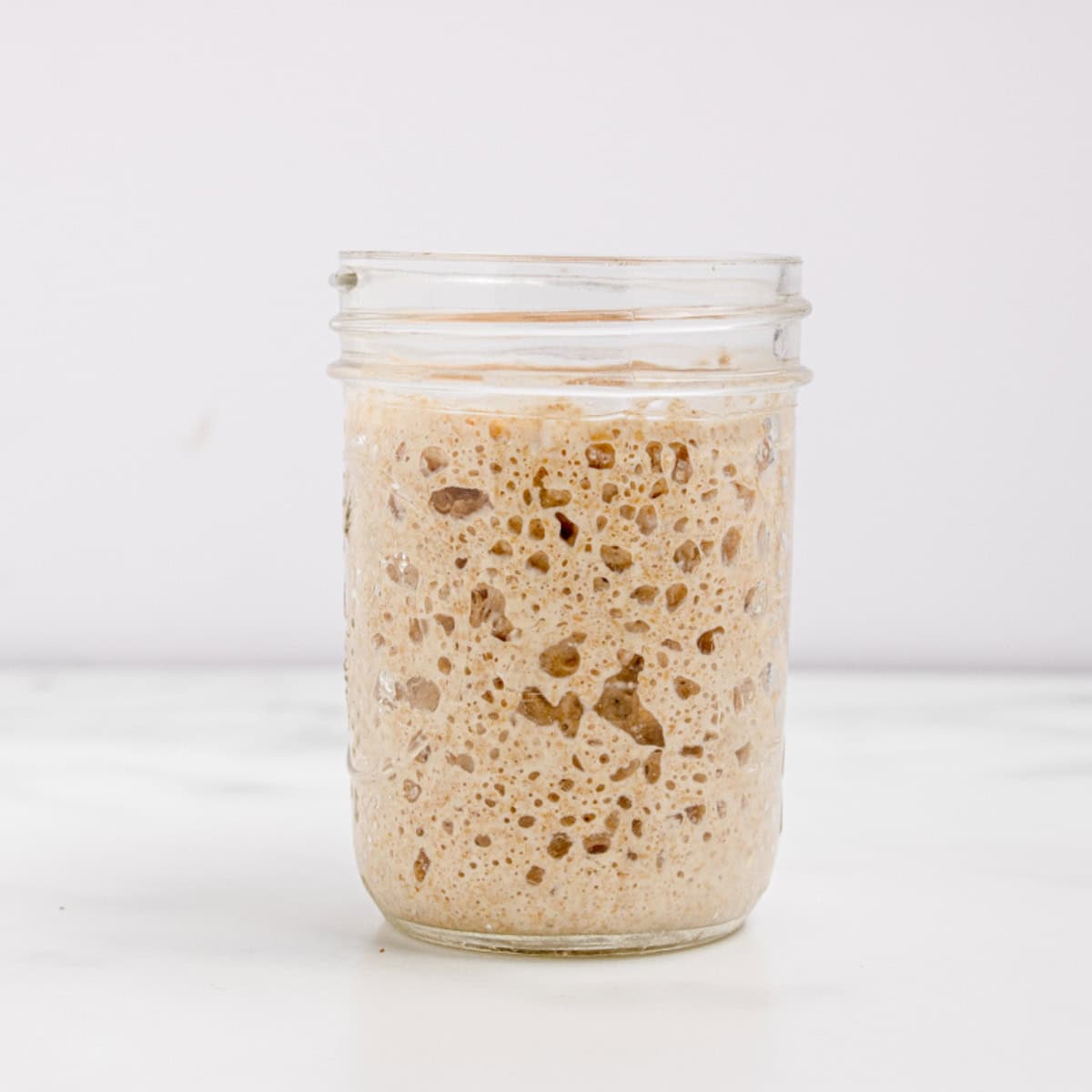
- Your starter is hungrier now. Switch to a 1:2:2 ratio to give it more food. What to do: Keep 20g starter, add 40g flour, and 40g water. Look for "vertical tunneling" (bubbles trapped in the side of the jar) and a sweet/sour yeasty aroma, cider or beer.
Days 11-14: Signs of a Mature Starter
- Your starter should now double (or triple) in size within 4-6 hours of feeding. If it rises predictably for three days in a row, it is officially "active" and ready to bake.