Ingredients
Method
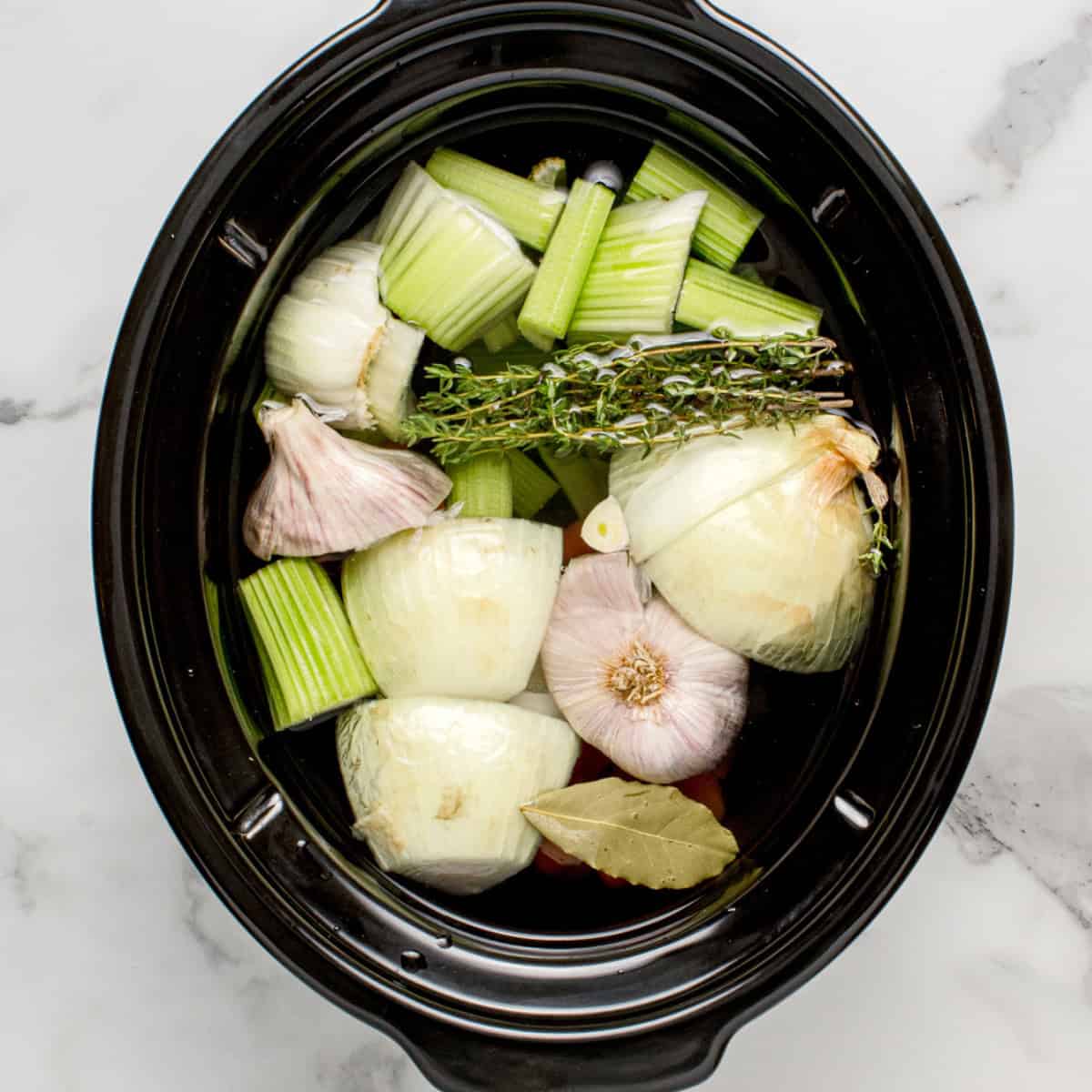
- Add the onion, thyme, garlic, carrots, celery, and bay leaf to the slow cooker. Pour in the water and season it lightly with salt and black pepper.
- Cover the slow cooker with the lid and cook it on Low for 8 to 10 hours or High for 4 to 5 hours.
- Place a fine-mesh sieve over a large bowl, then carefully pour the contents of the slow cooker through the sieve to separate the liquid from the cooked veggies.
- Throw away the cooked veggies and bay leaf and let the stock cool slightly before transferring it to airtight containers or jars.Store the vegetable stock in the refrigerator for up to 5 days or freeze it for 3 to 6 months.I recommend freezing the stock in smaller portions so you can grab exactly what you need for future recipes.
Try not to remove the lid while the stock is cooking. Every time the lid is lifted, heat escapes and can add extra cooking time.
Notes
Water: As the vegetables, garlic, and herbs slowly cook, the water pulls out their natural flavors and creates a light, flavorful base. Use clean, cold water.
Yellow Onion: Yellow onion becomes sweeter and adds depth without overpowering the other ingredients. There is no need to finely chop the onion. Large pieces are easier to strain. You can substitute it with a white onion, sweet onion, or shallots. Red onion can also be used, but it may slightly darken the color of the finished stock.
Fresh Thyme: Fresh thyme adds a gentle earthy flavor that complements the vegetables without taking over. If you do not have fresh thyme, you can use dried thyme. Fresh parsley stems, a small amount of rosemary, or sage can also be added.
Garlic: A whole bulb of garlic gives this vegetable stock a deep savory flavor with a subtle sweetness. There is no need to peel individual garlic cloves. If you do not have a whole bulb, you can substitute several whole garlic cloves. Garlic powder is not recommended because it can make the stock cloudy.
Baby Carrots: Carrots add natural sweetness and balance the savory flavors from the onion, celery, and garlic. Baby carrots are convenient because they require almost no preparation, but regular carrots work just as well.
Celery: Celery adds freshness and helps create the familiar taste we associate with homemade stock. Celery leaves can also be added because they contain a lot of flavor. If you do not have celery, fennel stalks or leeks can be used.
Bay Leaf: Bay leaf adds a subtle herbal flavor that helps bring all of the ingredients together. It also creates a deeper, more balanced stock when allowed to slowly infuse during cooking. If you do not have a bay leaf, you can simply leave it out.
Salt: Salt helps bring out the natural flavors of the vegetables, but vegetable stock is usually used as an ingredient in other recipes that may already contain salt. For the most versatile homemade stock, season it lightly or leave the salt out completely. This gives you more control when using the stock in soups, sauces, casseroles, and other dishes.
Black Pepper: Black pepper adds a gentle warmth and a little extra savory flavor to the stock. Freshly ground black pepper will provide the strongest flavor, but regular ground black pepper works well too. You can also use whole black peppercorns.