
If you’re anything like me, you probably have a carton of vegetable stock sitting in your pantry or fridge right now. I use stock ALL the time, especially when I’m making soups and stews, and while those cartons are convenient, the cost can really add up.
I love making my own slow cooker stock because it’s actually much easier than you might think. Toss your vegetables into the slow cooker, add some water, turn it on, and let it do its thing. That’s pretty much it!
I also love having homemade stock in the freezer because it means I always have some ready when I need it. It adds so much more flavor than using plain water, and vegetable stock is especially handy when I want something flavorful without changing the taste of the dish.
So grab your slow cooker, gather up those veggies, or veggie scraps, and let’s make some homemade vegetable stock!
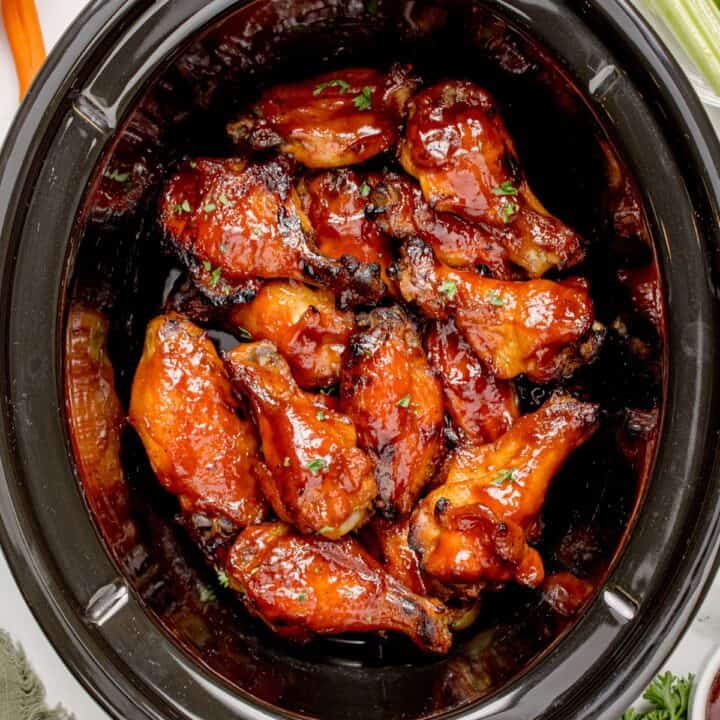
Looking for more easy Slow Cooker recipes? Try Slow Cooker Chicken Wings, Crockpot Alfredo Chicken, and Crockpot Applesauce.
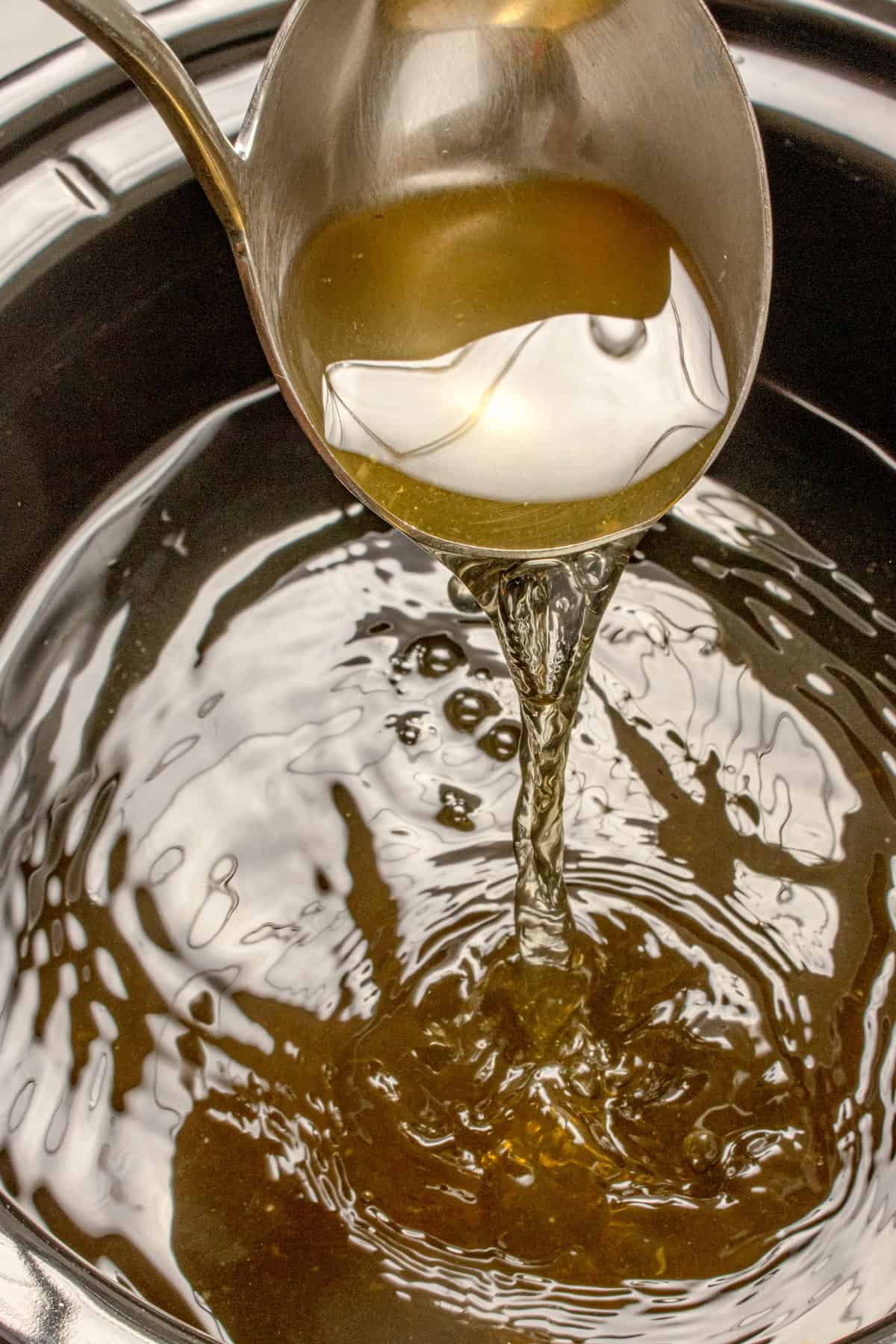
Why I Freeze My Stock
Whenever I make vegetable stock, I usually make a big batch and freeze it. There’s no point in making a small amount when the slow cooker is already doing most of the work!
I usually pour the cooled stock into large freezer bags, lay them flat, label, date and pop them in the freezer. When I need some for soup or another recipe, I just take a bag out, give it a few whacks with a rolling pin to break off what I need, and put the rest back in the freezer.
It might sound a little crazy, but it works! And having homemade stock ready to go in the freezer means I always have some on hand when I need it.
Jump To Recipe
Ingredients
You’ll need the following ingredients to make this Vegetable Stock Slow Cooker recipe.
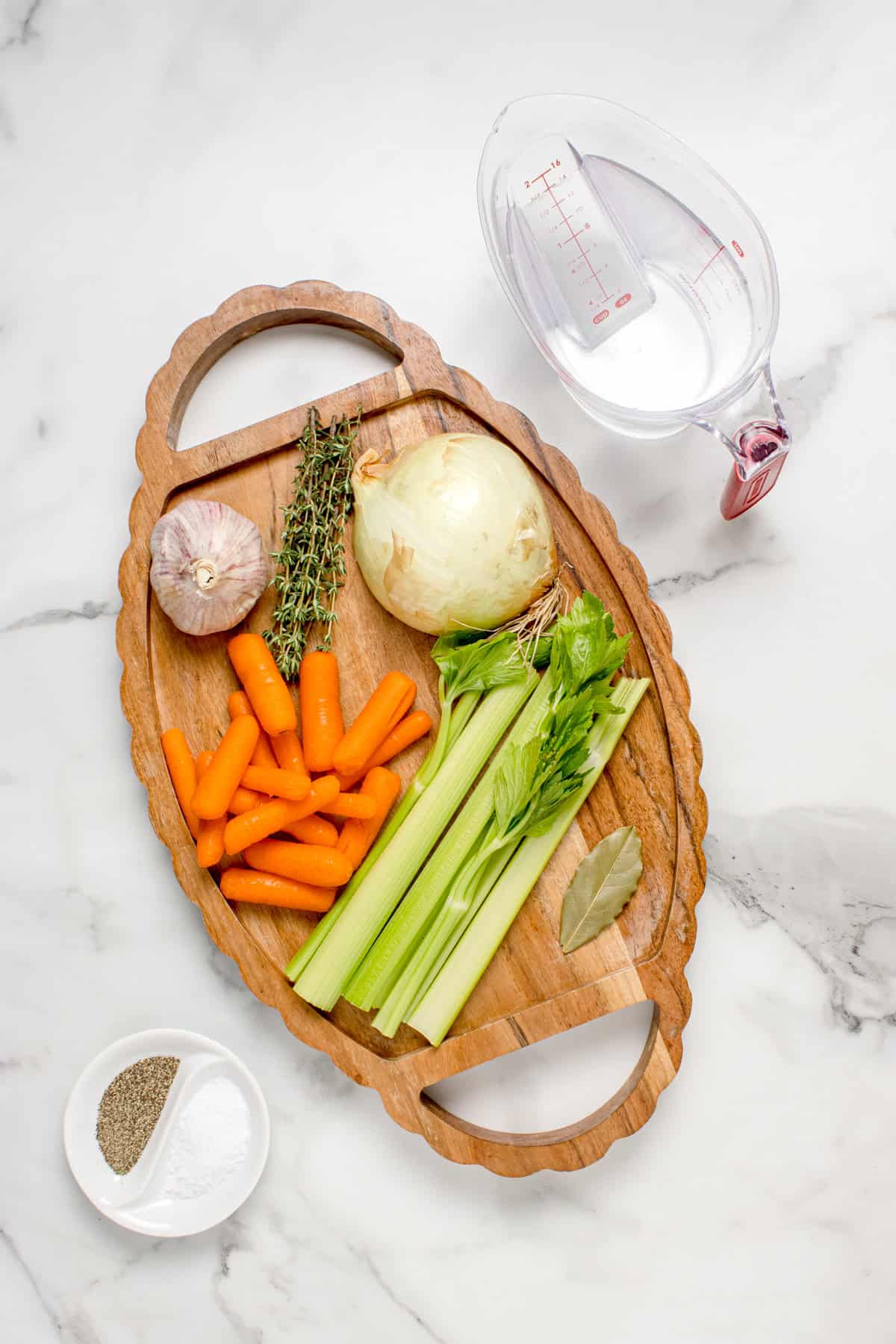
Ingredient Notes
Water: As the vegetables, garlic, and herbs slowly cook, the water pulls out their natural flavors and creates a light, flavorful base. Use clean, cold water.
Yellow Onion: Yellow onion becomes sweeter and adds depth without overpowering the other ingredients. There is no need to finely chop the onion. Large pieces are easier to strain. You can substitute it with a white onion, sweet onion, or shallots. Red onion can also be used, but it may slightly darken the color of the finished stock.
Fresh Thyme: Fresh thyme adds a gentle earthy flavor that complements the vegetables without taking over. If you do not have fresh thyme, you can use dried thyme. Fresh parsley stems, a small amount of rosemary, or sage can also be added.
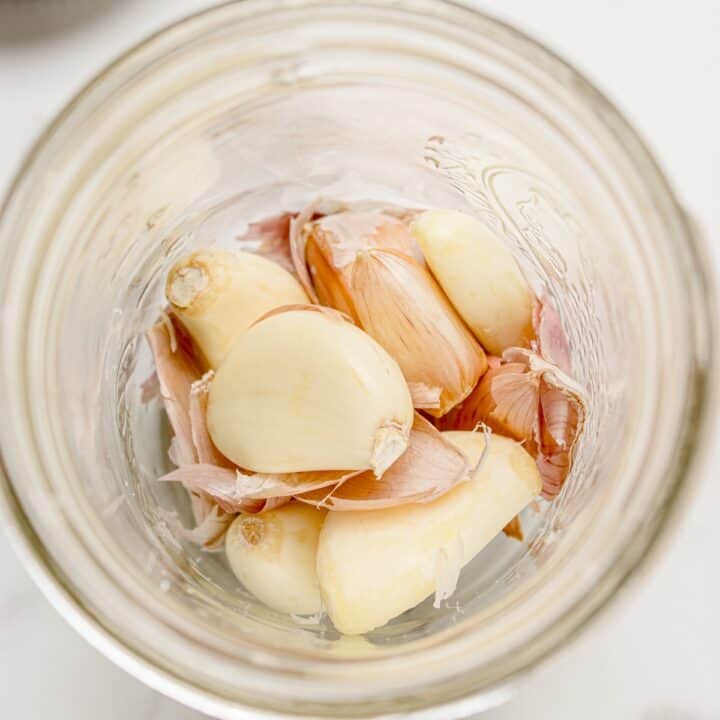
Garlic: A whole bulb of garlic gives this vegetable stock a deep savory flavor with a subtle sweetness. There is no need to peel individual garlic cloves. If you do not have a whole bulb, you can substitute several whole garlic cloves. Garlic powder is not recommended because it can make the stock cloudy.
Baby Carrots: Carrots add natural sweetness and balance the savory flavors from the onion, celery, and garlic. Baby carrots are convenient because they require almost no preparation, but regular carrots work just as well.
Celery: Celery adds freshness and helps create the familiar taste we associate with homemade stock. Celery leaves can also be added because they contain a lot of flavor. If you do not have celery, fennel stalks or leeks can be used.
Bay Leaf: Bay leaf adds a subtle herbal flavor that helps bring all of the ingredients together. It also creates a deeper, more balanced stock when allowed to slowly infuse during cooking. If you do not have a bay leaf, you can simply leave it out.
How To make Slow-Cooker Vegetable Stock
Check out these step-by-step instructions with images. Just so you know, you'll find all the details and exact ingredients of this recipe on the printable recipe card below!
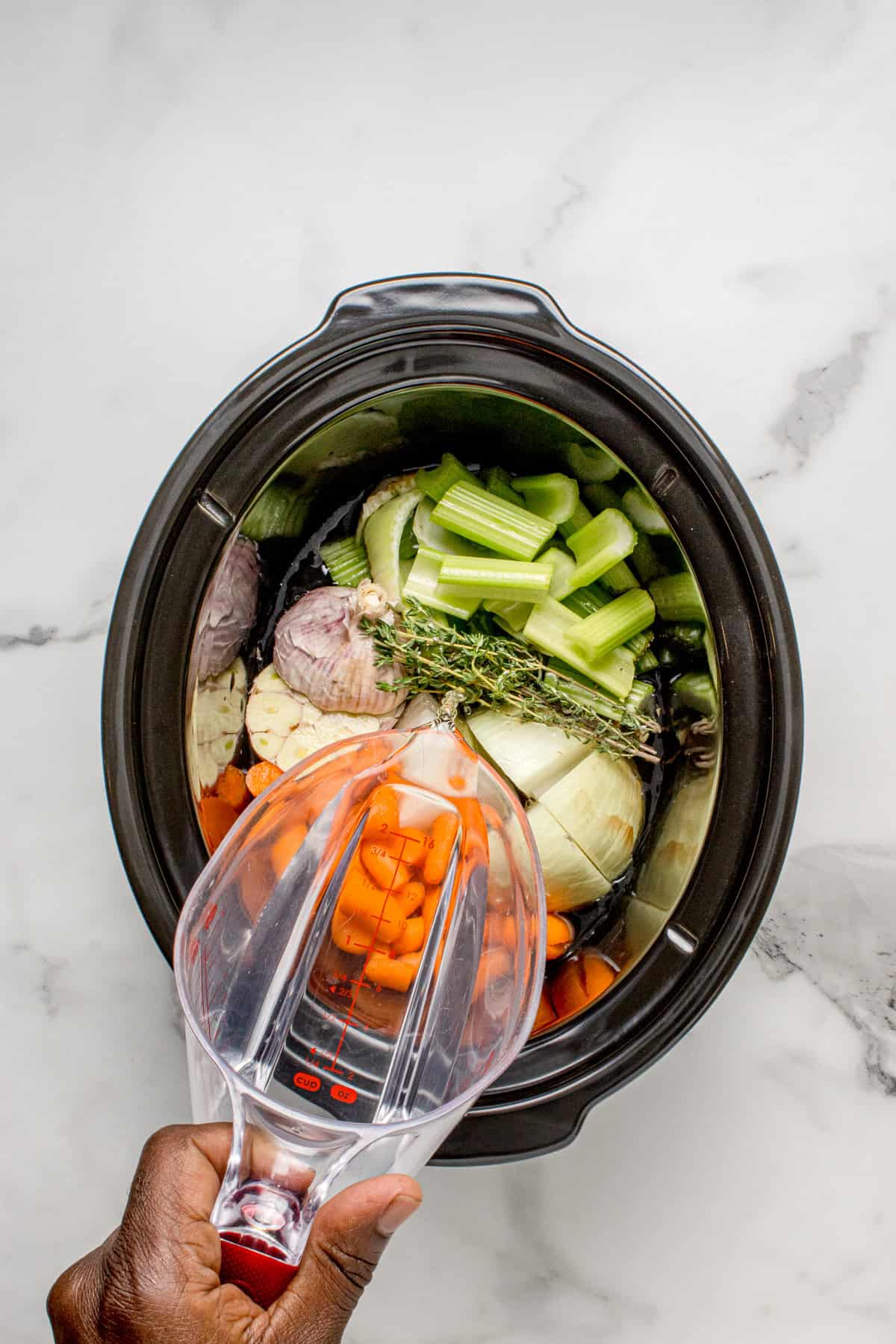
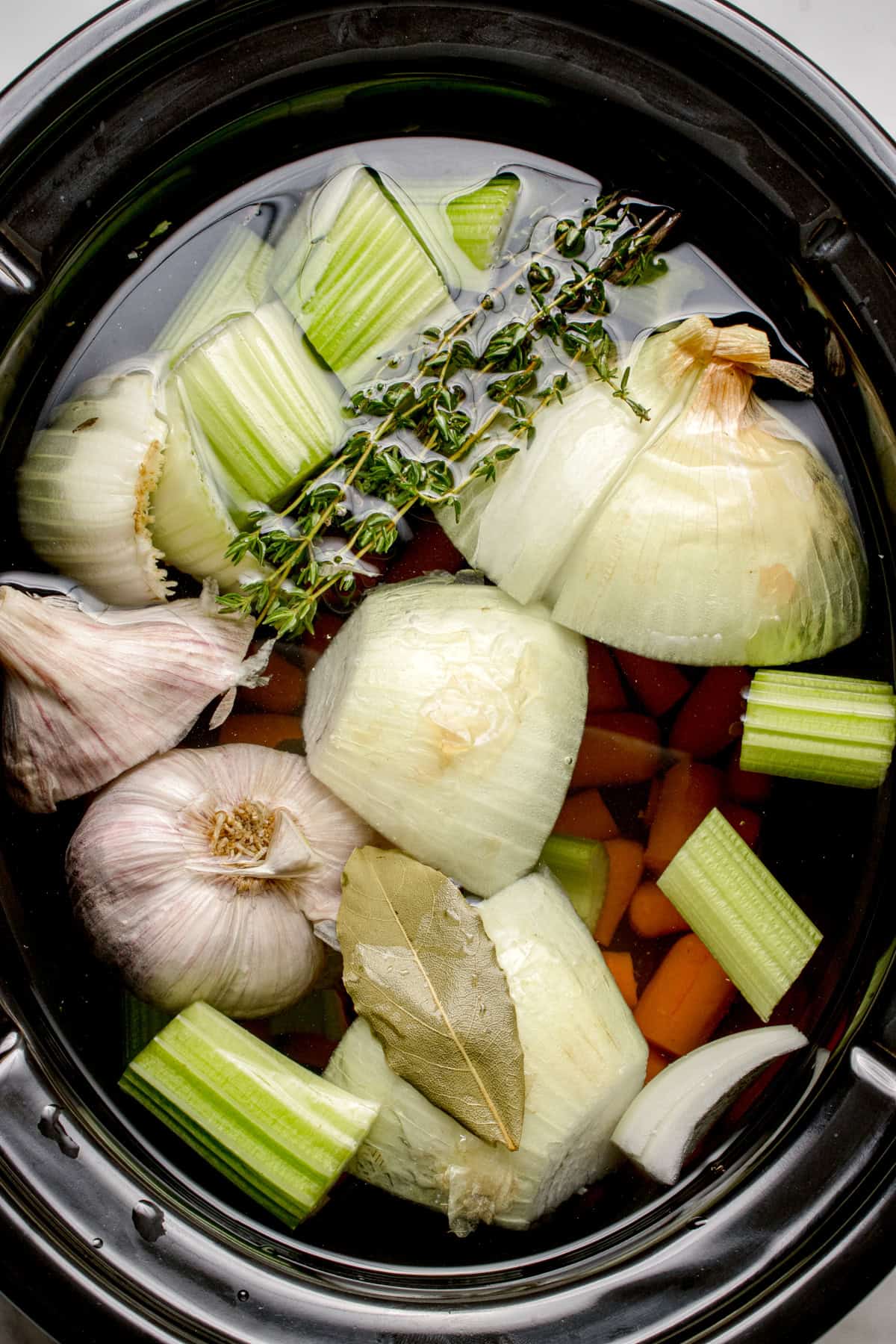
Step 1: Add the Ingredients
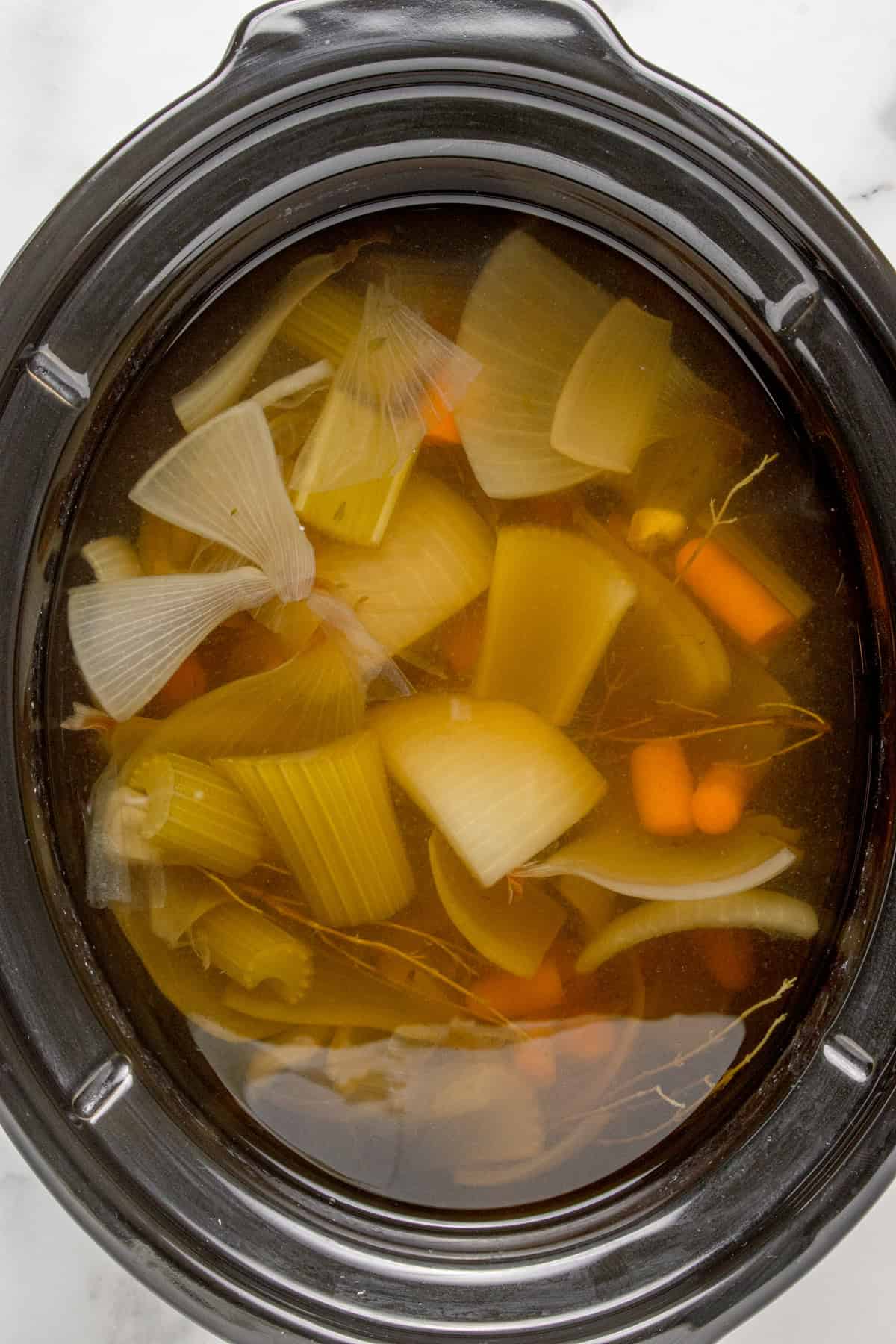
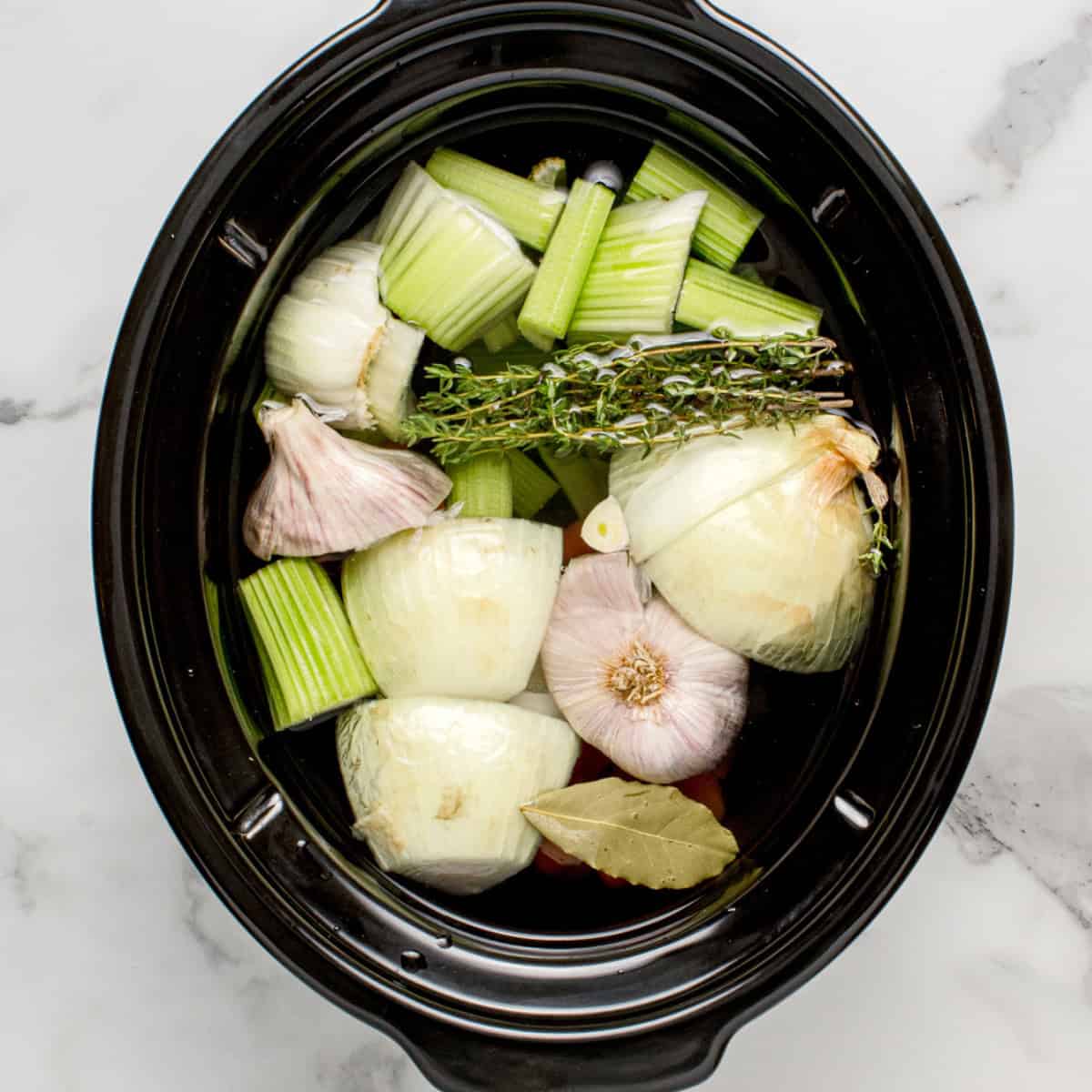
Add the onion, thyme, garlic, carrots, celery, and bay leaf to the slow cooker. Pour in the water and season it lightly with salt and black pepper.
Step 2: Cook the Stock
Cover the slow cooker with the lid and cook it on Low for 8 to 10 hours or High for 4 to 5 hours.
Note: Try not to remove the lid while the stock is cooking. Every time the lid is lifted, heat escapes and can add extra cooking time.
Step 3: Strain the Stock
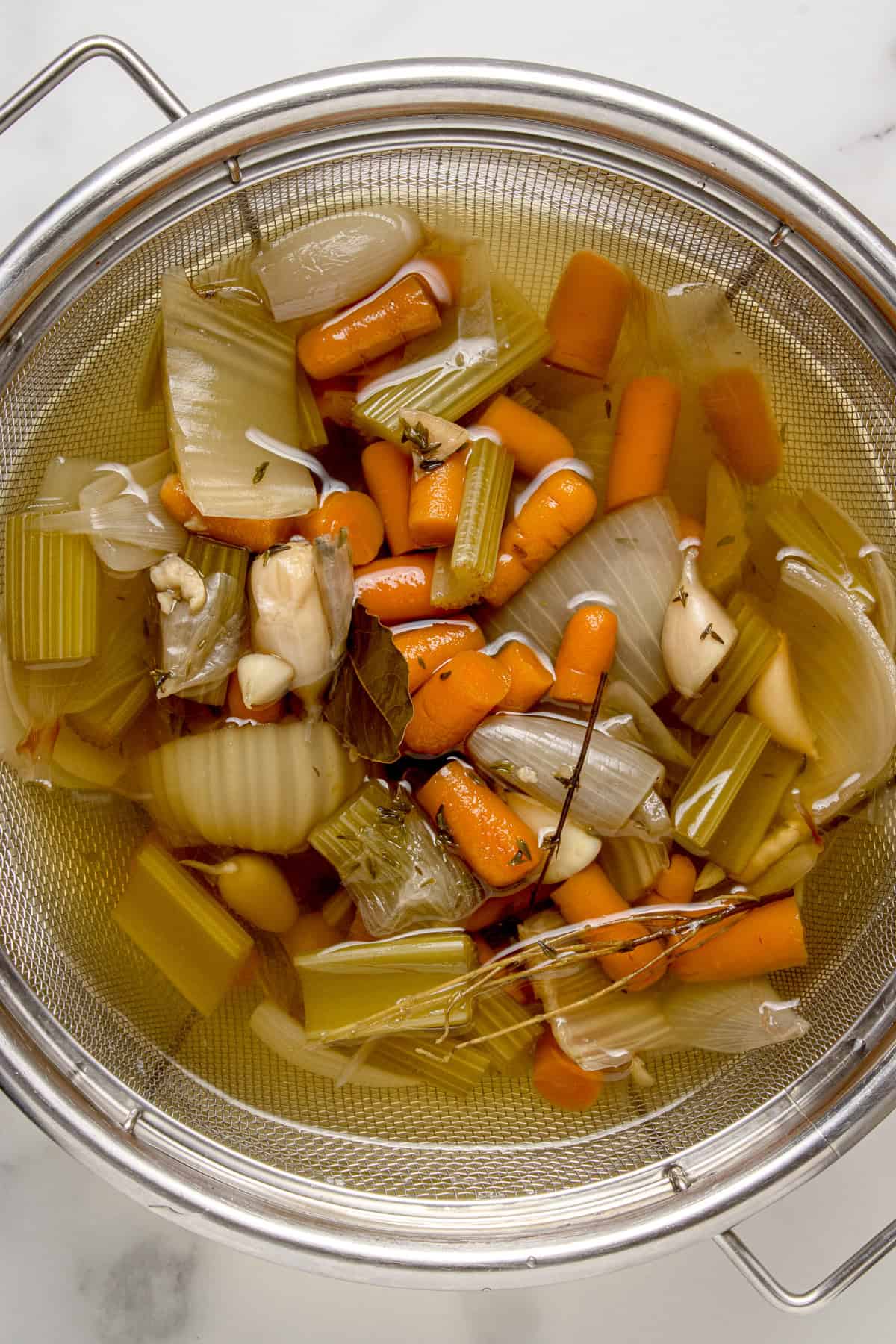
Place a fine-mesh sieve over a large bowl, then carefully pour the contents of the slow cooker through the sieve to separate the liquid from the cooked veggies.
Step 4: Store the Stock
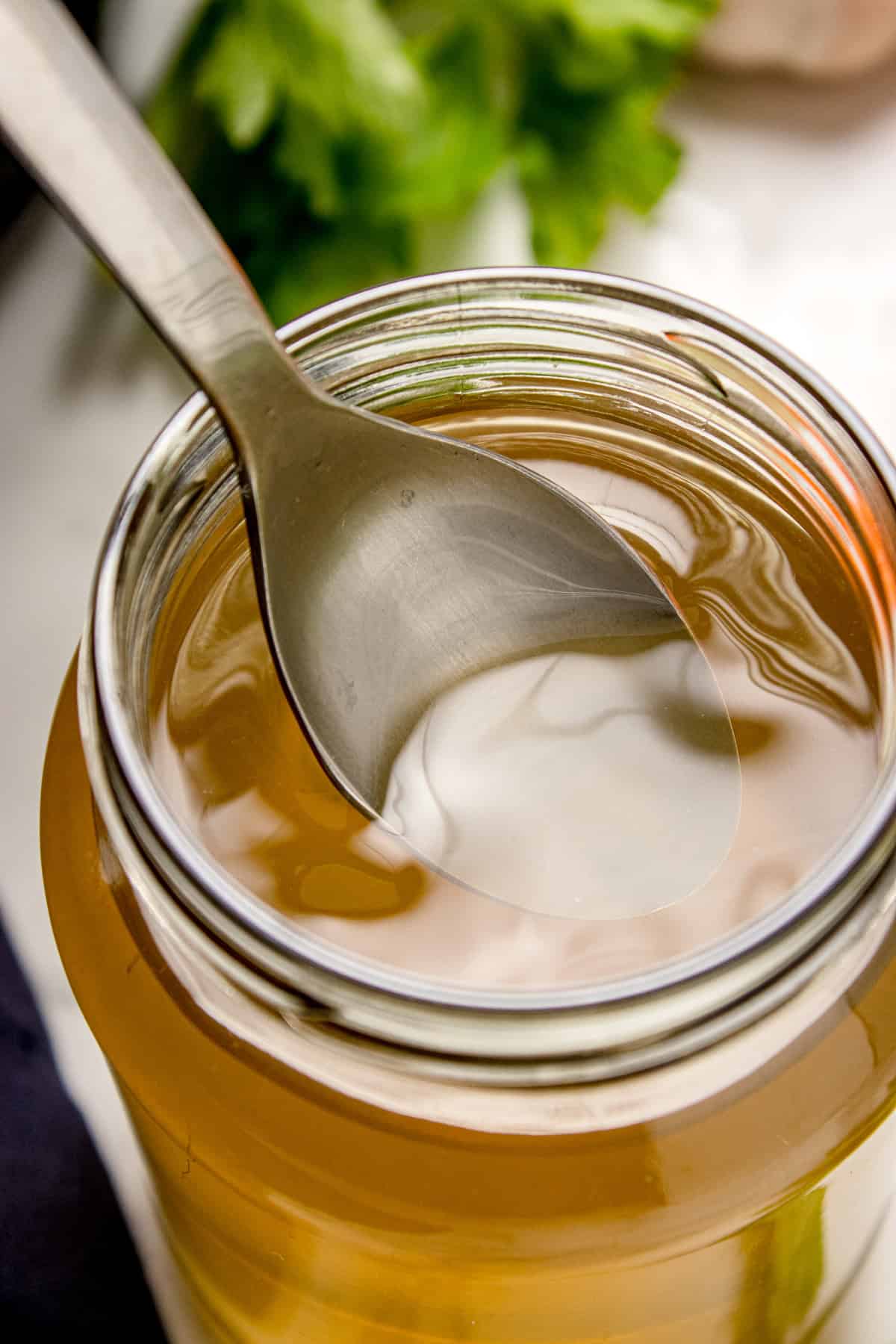
Throw away the cooked veggies and bay leaf and let the stock cool slightly before transferring it to airtight containers or jars.
Store the vegetable stock in the refrigerator for up to 5 days or freeze it for 3 to 6 months.
I recommend freezing the stock in smaller portions so you can grab exactly what you need for future recipes.
Recipe Tips and Tricks
Cut the vegetables into large pieces: Large pieces are easier to prepare, easier to remove, and allow the slow cooker to do the work.
Taste the stock after straining: Once the vegetables are removed, taste the finished stock and adjust the seasoning if needed.
Do not press the vegetables through the sieve: It can be tempting to squeeze out every last drop of liquid, but pressing the vegetables can make the stock cloudy. I usually allow the liquid to drain naturally through the sieve.
Label every container: Always label your containers before freezing with the name of the stock and the preparation date. This helps you use older stock first and prevents your freezer from filling up with "mystery containers" which is a common challenge that I face!
Storage and Reheating
In the Refrigerator: Allow the vegetable stock to cool before transferring it into airtight containers or jars. Store your homemade vegetable stock in the refrigerator for up to 5 days.
How to Freeze Vegetable Stock: Freezing is the best way to keep homemade vegetable stock available for future meals. Allow the stock to cool completely before transferring it into freezer-safe containers, freezer bags, or silicone molds.
Freeze the stock in portions that make sense for how you cook. I have found that one-cup and two-cup portions are especially useful because many recipes call for those amounts.
If you happen to be using rigid containers, leave about one inch of space at the top because the stock will expand as it freezes.
If you are using freezer bags, lay them flat on a baking sheet until they are frozen. Once solid, the bags can be stacked upright or flat to save freezer space. For the best flavor, use frozen vegetable stock within 3 to 6 months.
How to Thaw Vegetable Stock: The easiest way to thaw frozen vegetable stock is to transfer it from the freezer to the refrigerator and allow it to thaw overnight. If you need it faster, place the sealed container or freezer bag in a bowl of cool water. Change the water as needed until the stock has thawed.
You can also add the frozen stock directly into stock, stews, sauces, and other hot recipes. The heat from the recipe will slowly melt the stock while adding extra flavor.
How to Reheat Vegetable Stock: To reheat vegetable stock, pour the amount you need into a saucepan and warm it over medium heat until heated through. Stir occasionally and taste before using. If you are serving the stock as a broth, adjust the seasoning with additional salt and pepper if needed.
Avoid repeatedly heating and cooling the entire batch. Instead, warm only the portion you plan to use. This helps maintain the quality and flavor of the remaining stock.
Your Questions Answered
I usually skip broccoli, cabbage, and Brussels sprouts because they can make your stock bitter. Avoid beets and sweet potatoes too, coz they can cloud the stock or turn it pink. And always remember to use clean, fresh veggies or scraps.
Stick with onions, carrots, and celery, then add garlic, parsley, thyme, and bay leaves. Clean leek tops, mushroom stems, and corn cobs are great additions too. Dried mushrooms or tomato paste can add even more savory flavor.
Roast your veggies first for deeper, caramelized flavor. Add tomato paste or dried mushrooms for extra flavor. Season the stock with salt at the end so you can control the flavor.
The difference between vegetable stock and vegetable broth mostly comes down to how they are used.
Vegetable stock is typically made by slowly extracting flavor from vegetables, herbs, and aromatics. It is usually lightly seasoned because it is meant to become the foundation of another recipe.
Vegetable broth is often more seasoned and can be flavorful enough to enjoy on its own.
In everyday cooking, the terms are often used interchangeably.
Yes. Using vegetable scraps is one of the best ways to make homemade vegetable stock more affordable and reduce food waste.
Cloudiness is usually caused by small pieces of vegetables, herbs, or particles mixing into the liquid.
For a clearer stock: Use a fine-mesh sieve, Pour slowly when straining, Avoid pressing the vegetables. Strain the stock a second time through cheesecloth if needed. A cloudy stock is still safe to use and will taste just as good. The difference is mostly appearance.
In a Dinner Rut?
Sign up for our newsletter!
Please Rate this Recipe!
We hope you love this Vegetable Stock Slow Cooker recipe! If you make it, be sure to leave a rating so we know how you liked it!
More Recipes You'll Love
Looking for other easy and delicious recipes? Try these:


Recipe
Vegetable Stock (Slow Cooker Recipe)
Ingredients
Method
- Add the onion, thyme, garlic, carrots, celery, and bay leaf to the slow cooker. Pour in the water and season it lightly with salt and black pepper.
- Cover the slow cooker with the lid and cook it on Low for 8 to 10 hours or High for 4 to 5 hours.
- Place a fine-mesh sieve over a large bowl, then carefully pour the contents of the slow cooker through the sieve to separate the liquid from the cooked veggies.
- Throw away the cooked veggies and bay leaf and let the stock cool slightly before transferring it to airtight containers or jars.Store the vegetable stock in the refrigerator for up to 5 days or freeze it for 3 to 6 months.I recommend freezing the stock in smaller portions so you can grab exactly what you need for future recipes.


We'd Love to Hear From You